
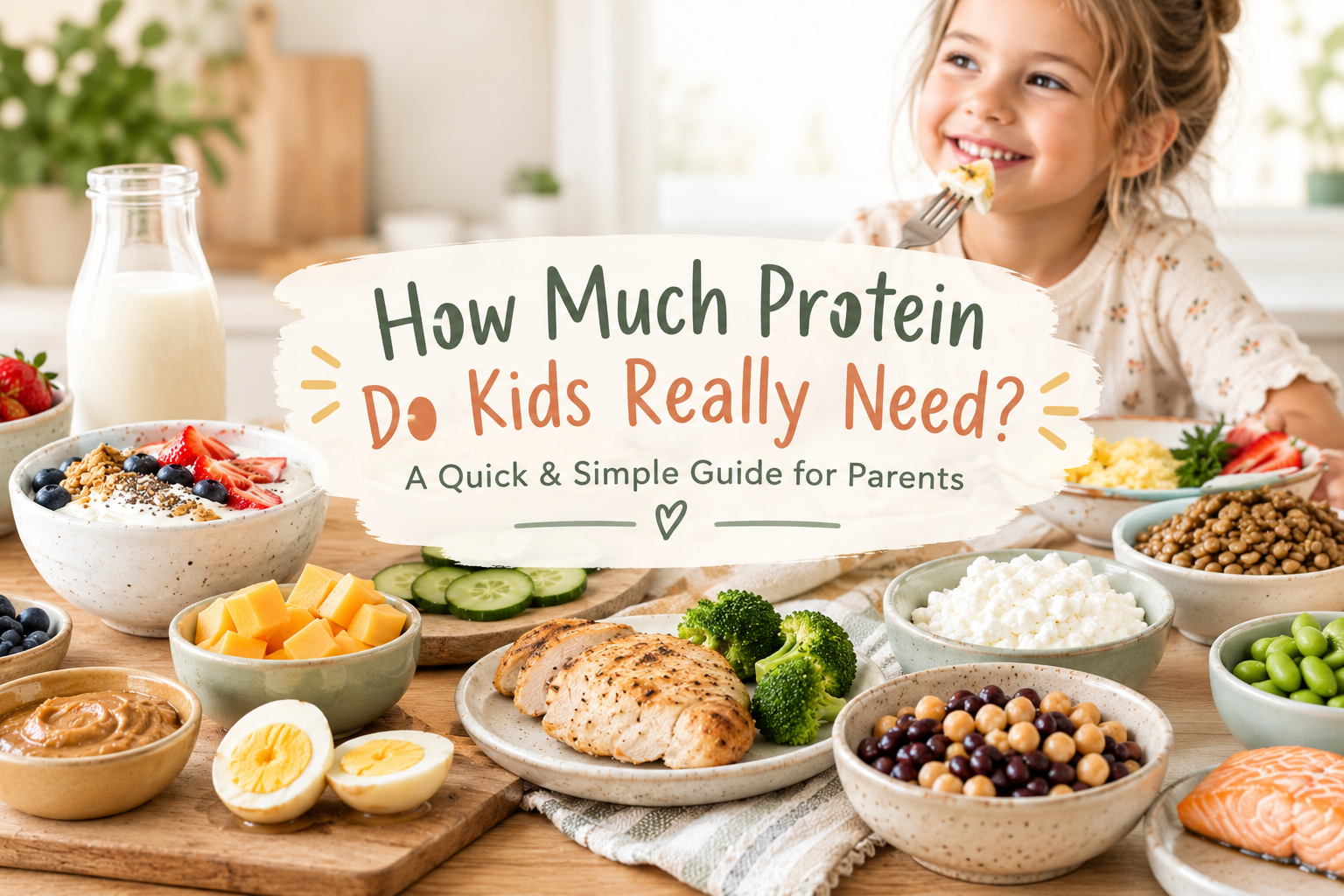
Protein seems to be everywhere right now.
Protein seems to be everywhere right now.
Protein pancakes. Protein bars. Protein cereal. Protein shakes. Even foods that have always contained protein suddenly have “HIGH PROTEIN” printed across the front of the package.
So it’s understandable that parents might wonder:
Is my child getting enough protein?
Or maybe your child would happily live on crackers, berries, and buttered noodles and you’re wondering where protein is supposed to fit into that picture.
Here’s the reassuring part: building protein into a child’s diet doesn’t have to mean tracking every gram or turning breakfast into a nutrition project.
Many familiar foods — including eggs, yogurt, milk, cheese, beans, chicken, fish, tofu, lentils, nut or seed butters, and certain grains — already provide protein.
In this guide, we’ll look at how much protein kids generally need, easy protein-rich foods, simple meal combinations, protein ideas for picky eaters, and whether popular products like protein bars and powders are actually necessary for most children.

Important: This article provides general educational information only. Children’s nutritional needs vary based on factors including age, growth, activity, health, and individual circumstances. It is not intended to provide medical or individualized nutrition advice. Talk with your child’s pediatrician or another qualified healthcare professional if you have questions about your child’s growth, diet, allergies, feeding, or nutritional needs.
Table of Contents
- Why Do Kids Need Protein?
- How Much Protein Do Kids Need?
- Protein Needs by Age
- What Does That Amount of Protein Actually Look Like?
- 20 Easy Protein Foods for Kids
- Easy Protein Foods for Picky Eaters
- High-Protein Breakfast Ideas for Kids
- Easy Protein Lunch Ideas
- Protein-Packed Dinner Ideas
- Healthy Protein Snacks for Kids
- The Easy Protein + Carb + Produce Formula
- How to Add Protein Without Completely Changing a Meal
- Do Kids Need Protein at Every Meal?
- Do Kids Need Protein Bars?
- Do Kids Need Protein Powder?
- What About Vegetarian Kids?
- Common Protein Mistakes Parents Don’t Need to Worry About
- Helpful Kitchen Products for Easy Kids’ Meals
- Frequently Asked Questions
- The Bottom Line
Why Do Kids Need Protein?
Protein is one of the nutrients children need as part of a balanced diet.
The body uses protein to build and maintain tissues and to make many important compounds involved in normal body functions.
For growing children, protein is one piece of a much bigger nutritional picture.
That last part matters.
Protein gets enormous attention, but children also need carbohydrates, fats, fiber, vitamins, minerals, and enough overall food to support their individual needs.
So rather than asking:
“How can I make every meal high-protein?”
a more useful question may be:
“How can I regularly include a protein food as part of varied family meals?”
That’s usually much easier.
How Much Protein Do Kids Need?
Protein needs change as children grow.
One way U.S. nutrition recommendations describe protein requirements is through the Recommended Dietary Allowance (RDA), which provides general daily reference amounts for healthy individuals in different age groups.
Approximate daily protein RDAs include:
| Age | Protein per Day |
|---|---|
| 1–3 years | 13 g |
| 4–8 years | 19 g |
| 9–13 years | 34 g |
| Girls 14–18 years | 46 g |
| Boys 14–18 years | 52 g |
These numbers are general reference values — not personalized targets that parents need to hit perfectly every day.
Individual needs can vary.
For most families, there’s usually no reason to pull out a calculator at breakfast.
Looking at eating patterns over time is generally much more practical than trying to make every single meal nutritionally perfect.
What Does That Amount of Protein Actually Look Like?
Numbers like 13 grams or 19 grams can sound abstract.
Food makes them easier to understand.
Protein content varies by product, portion size, brand, and preparation, but approximate amounts might look like this:
| Food | Approximate Protein |
|---|---|
| 1 large egg | 6 g |
| 1 cup cow’s milk | 8 g |
| 1/2 cup Greek yogurt | 10–12 g |
| 1 oz cheddar cheese | 7 g |
| 2 Tbsp peanut butter | 7 g |
| 1/2 cup cooked lentils | 9 g |
| 1/2 cup cooked black beans | 7–8 g |
| 1 oz cooked chicken | 8–9 g |
| 1 oz cooked salmon | about 6 g |
| 1/2 cup cottage cheese | about 12–14 g |
Exact amounts vary, so check the Nutrition Facts label when you need information about a specific food.
Here’s why these examples are useful.
A younger child might eat some yogurt at breakfast, cheese at lunch, and chicken or beans at dinner.
Protein can accumulate naturally throughout the day without anyone serving a giant steak or adding protein powder to a smoothie.
20 Easy High-Protein Foods for Kids
You don’t need specialty “kids protein” products to include protein in family meals.
Many everyday foods already provide it.
Here are 20 options worth keeping in rotation:
- Eggs
- Greek yogurt
- Regular yogurt
- Cottage cheese
- Milk
- Cheese
- Chicken
- Turkey
- Lean beef
- Fish
- Beans
- Lentils
- Chickpeas
- Tofu
- Edamame
- Peanut butter
- Other nut butters
- Seed butters
- Hummus
- Oats and other protein-containing grains
Of course, not every food is appropriate for every child.
Consider allergies, age, choking risk, dietary preferences, and individual needs when choosing and preparing foods.

Easy Protein Foods for Picky Eaters
This is where protein questions often become practical.
Your child doesn’t care that lentils contain protein.
They’ve already decided lentils are suspicious.
Instead of dramatically changing meals, start with foods your child already accepts.
For some picky eaters, approachable protein foods might include:
- scrambled eggs
- cheese
- yogurt
- cottage cheese
- peanut or seed butter
- hummus
- chicken pieces
- turkey
- quesadillas
- bean-and-cheese burritos
- pasta with meatballs
- yogurt smoothies
- oatmeal made with milk
You can also build outward from a familiar food.
If your child loves toast:
Try:
Toast + scrambled egg + strawberries
or:
Toast + nut or seed butter + banana

If your child loves crackers:
Try:
Crackers + cheese + cucumber + berries

If your child loves pasta:
Try:
Pasta + chicken + peas
or:
Pasta + meatballs + broccoli
If your child loves tortillas:
Try:
Cheese quesadilla + black beans + avocado

The meal doesn’t need to suddenly look completely different.
You’re simply adding another component.
High-Protein Breakfast Ideas for Kids
Breakfast is one of the easiest places to include protein because many familiar breakfast foods naturally contain it.
Here are some easy combinations.
1. Eggs + Toast + Fruit
Scrambled eggs with whole-grain toast and berries make a simple weekday breakfast.
2. Greek Yogurt Breakfast Bowl
Try Greek yogurt topped with:
- banana
- berries
- oats
- chia seeds, when age-appropriate
- a small amount of nut or seed butter, when appropriate
3. Peanut Butter Banana Toast
Spread peanut butter on toast and top it with banana slices.
For households managing nut allergies, an appropriate seed butter may be an alternative.
4. Oatmeal Made With Milk
Cooking oatmeal with milk rather than water is an easy way to add protein without changing breakfast dramatically.
Add fruit and nut or seed butter if appropriate.
5. Cottage Cheese + Fruit + Toast
Cottage cheese works well with berries, peaches, pears, or banana.
6. Mini Egg Muffins
Egg muffins can be prepared ahead with ingredients such as:
- eggs
- cheese
- spinach
- bell pepper
- finely chopped vegetables
Refrigerate appropriately and reheat for busy mornings.
7. Yogurt + Mini Pancakes + Fruit
Serve mini pancakes alongside yogurt instead of relying on the pancakes to provide the entire breakfast.
Tiny Tummies Tip: You don’t have to turn pancakes into “protein pancakes.” Sometimes adding yogurt or an egg on the side is the easier solution.
Easy Protein Lunch Ideas for Kids
Lunch doesn’t need to be complicated either.
Try combinations such as:
Turkey Sandwich Plate
Turkey sandwich + cucumber + strawberries
DIY Snack Plate
Cheese + crackers + berries + cucumber
Chicken Quesadilla
Tortilla + chicken + cheese with avocado and corn
Hummus Plate
Hummus + pita + cucumber + soft vegetables + fruit
Egg Lunch
Hard-boiled or appropriately prepared egg + toast + fruit + avocado
Yogurt Lunchbox
Greek yogurt + fruit + oats or granola appropriate for your child’s age + another familiar side
Bean & Cheese Burrito
Beans + cheese + tortilla with fruit on the side
These combinations can also work well for school lunches.
Just remember to follow food-safety guidance and keep foods that require refrigeration appropriately chilled until lunchtime.
Protein-Packed Dinner Ideas
Dinner is another place where protein often appears naturally.
Try:
Chicken + rice + roasted carrots
Pasta + meatballs + broccoli
Salmon + potatoes + peas
Bean-and-cheese tacos + avocado + corn
Chicken quesadillas + fruit
Lentil pasta + tomato sauce + vegetables
Baked potato + chicken + cheese + fruit
Tofu + rice + soft cooked vegetables
Again, these aren’t nutritional prescriptions.
They’re simply examples showing how easily protein can fit into familiar family meals.
Healthy Protein Snacks for Kids
Snacks can also contribute protein.
Instead of thinking of snacks as tiny meals that need five ingredients, try pairing two simple foods.
Easy combinations:
Greek yogurt + berries
Cheese + crackers
Apple + peanut or seed butter
Banana + peanut butter
Hummus + pita
Cottage cheese + fruit
Egg + toast
Yogurt + banana
Cheese + cucumber
Edamame + fruit, when appropriately prepared for the child’s age
One useful formula is:
Protein + Produce
For example:
Cheese + strawberries
or:
Yogurt + blueberries
Another is:
Protein + Carb
For example:
Hummus + pita
or:
Nut butter + toast
Simple is perfectly fine.
The Easy Protein + Carb + Produce Formula
If meal planning makes you stare into the refrigerator without knowing where to start, use this simple framework:
1. Choose a Protein
Examples:
eggs, yogurt, cheese, chicken, turkey, fish, beans, lentils, tofu, hummus, or nut/seed butter when appropriate.
2. Add a Carb
Examples:
toast, rice, pasta, oatmeal, potatoes, tortillas, pita, crackers, or another grain.
3. Add Produce
Choose a fruit, vegetable, or both.
That’s it.
For example:
Breakfast: Egg + toast + strawberries
Lunch: Turkey + bread + cucumber + blueberries
Snack: Yogurt + oats + banana
Dinner: Chicken + rice + broccoli
You can add healthy fats and other foods depending on the meal and your family’s preferences.
The formula isn’t a rule.
It’s simply a shortcut for busy parents.
How to Add Protein Without Completely Changing a Meal
Sometimes the easiest approach is not creating a new recipe.
It’s upgrading something you’re already making.
Oatmeal
Instead of:
Oatmeal + banana
try:
Oatmeal made with milk + banana + nut or seed butter
Toast
Instead of:
Toast + fruit
try:
Toast + egg + fruit
Pasta
Instead of:
Plain pasta
try:
Pasta + chicken
or:
Pasta + meatballs
or:
Pasta + beans
Snack
Instead of:
Strawberries
try:
Strawberries + yogurt
Crackers
Instead of:
Crackers
try:
Crackers + cheese
These small additions are often easier than convincing a picky child to eat an entirely unfamiliar meal.
Do Kids Need Protein at Every Meal?
You don’t need to make every meal a protein competition.
Children eat across the entire day, and nutritional patterns matter more than making each plate perfectly balanced.
That said, regularly including protein-containing foods in meals and snacks can be a practical way to build variety.
For example, one day might include:
Breakfast: oatmeal made with milk + banana
Snack: yogurt + berries
Lunch: turkey sandwich + cucumber
Snack: crackers + cheese
Dinner: pasta + chicken + peas
There’s no need to add up every gram unless your child’s healthcare professional has recommended doing so for an individual reason.
Do Kids Need Protein Bars?
Walk through almost any grocery store and you’ll find an entire wall of bars.
Some are essentially granola bars.
Others contain substantial amounts of protein.
So do kids need them?
For most families, protein bars are best viewed as convenience foods rather than necessities.
Whole and minimally processed foods can provide protein throughout the day, but bars can occasionally be convenient for travel, busy afternoons, sports days, or situations where portable food is useful.
When comparing products, parents can look at:
- serving size
- protein amount
- added sugars
- ingredients
- allergens
- age-appropriate texture
- overall nutritional profile
Some adult protein bars may also contain ingredients or quantities that weren’t designed with young children in mind.
If you’re uncertain whether a specific product is appropriate for your child, check with their healthcare professional.
Do Kids Need Protein Powder?
Protein powder has become so common that adding a scoop to breakfast can seem completely ordinary.
But most healthy children eating a varied diet don’t automatically need protein powder simply because protein is popular.
Protein powders and shakes are supplements, not requirements for a balanced childhood diet.
There are also important differences among products, including ingredients, sweeteners, added vitamins and minerals, serving sizes, allergens, and intended users.
For that reason, I wouldn’t recommend casually adding an adult protein supplement to a child’s diet without discussing it with the child’s pediatrician or another appropriately qualified healthcare professional.
Food-first options are often much simpler.
A smoothie, for example, might include:
milk + yogurt + banana + berries
without needing a scoop of protein powder.
What About Vegetarian Kids?
Protein doesn’t have to come from meat.
Families following vegetarian eating patterns have many protein-containing options, including:
- beans
- lentils
- chickpeas
- tofu
- tempeh
- edamame
- eggs
- dairy foods
- soy foods
- nut and seed butters
- certain whole grains
For example:
Breakfast:Oatmeal + milk or fortified soy beverage + nut or seed butter + fruit
Lunch:Bean-and-cheese quesadilla + avocado + fruit
Snack: Greek yogurt + berries
Dinner: Lentil pasta + tomato sauce + vegetables
Families following more restrictive dietary patterns may benefit from individualized professional guidance to make sure overall nutritional needs are being met.
Protein Mistakes Parents Don’t Need to Worry About
Protein marketing can make ordinary family meals feel inadequate.
They usually aren’t.
Here are a few things you don’t need to turn into daily stress.
“Breakfast Has to Be High-Protein”
It doesn’t need a giant protein number printed next to it.
Try including a protein food as part of a balanced breakfast.
That’s much simpler.
“Every Snack Needs Protein”
Fruit by itself can still be a perfectly reasonable snack.
Sometimes you might pair it with yogurt or cheese.
Sometimes you won’t.
“My Child Doesn’t Eat Meat, So They Can’t Get Protein”
Plenty of non-meat foods provide protein.
“More Protein Must Be Better”
Children need appropriate nutrition — not the largest possible amount of one nutrient.
“I Need to Track Every Gram”
For most healthy children eating a varied diet, parents generally don’t need to turn meals into spreadsheets.
If there’s a specific nutritional concern, that’s where individualized guidance becomes useful.
Helpful Kitchen Products for Easy Kids’ Meals
This section may contain affiliate links. If you purchase through these links, Tiny Tummies may earn a commission at no additional cost to you.
You don’t need special equipment to serve balanced meals, but a few practical kitchen products can make prepping and packing food easier.
1. Bentgo Kids Lunch Box*
A divided lunchbox can make it easy to pack a protein food, fruit or vegetable, grain, and another side without using multiple containers.
Good for:
- turkey and cheese roll-ups
- crackers and cheese
- yogurt sides
- fruit
- vegetables
- quesadilla pieces
2. OXO Tot Small & Large Bowl Set*
Simple kid-friendly bowls are useful for yogurt, oatmeal, cottage cheese, fruit, and other easy breakfasts and snacks.
They’re especially practical when you’re serving smaller portions and letting children ask for more if they’re still hungry.
3. Souper Cubes Freezer Trays*
Batch cooking can make weekday meals much easier.
Freezer portion trays are useful for preparing and freezing family foods such as:
- pasta sauce
- shredded chicken
- beans
- lentil dishes
- soups
- oatmeal
Always follow appropriate cooling, freezing, thawing, and reheating practices.
4. Stasher Reusable Silicone Bags*
Reusable food-storage bags can be handy for packing foods such as sandwiches, crackers, cheese, fruit, or other snacks.
Amazon: [CHECK PRICE ON AMAZON]
They’re also useful for organizing prepped ingredients in the refrigerator.
5. Rubbermaid Brilliance Food Storage Containers
Meal-prep containers can make it easier to keep cooked ingredients ready for quick family meals.
For example, you might prep:
Container 1: cooked chicken
Container 2: rice
Container 3: washed fruit
Container 4: cooked vegetables
Then mix and match throughout the week.
Frequently Asked Questions
How much protein does a toddler need per day?
The general U.S. RDA for children ages 1–3 is 13 grams of protein per day.
This is a population-level reference value rather than a personalized target. Individual needs may differ based on growth, health, activity, and other factors.
How much protein does a 4-year-old need?
The general RDA for children ages 4–8 is 19 grams per day.
Parents generally don’t need to hit that number perfectly at every meal or track every gram unless advised to do so for an individual reason.
What foods are high in protein for kids?
Common protein-containing foods include eggs, yogurt, cottage cheese, milk, cheese, chicken, turkey, fish, beans, lentils, tofu, hummus, edamame, and nut or seed butters when appropriate.
What are easy high-protein foods for picky eaters?
Start with familiar foods.
Depending on your child’s preferences, options might include scrambled eggs, yogurt, cheese, peanut or seed butter, quesadillas, chicken, turkey, cottage cheese, meatballs, or smoothies made with yogurt and milk.
How can I add more protein to my child’s breakfast?
You don’t necessarily need a special high-protein recipe.
Try simple additions such as:
- adding an egg alongside toast
- making oatmeal with milk
- serving pancakes with yogurt
- adding nut or seed butter to toast when appropriate
- serving Greek yogurt with fruit
- pairing fruit with cottage cheese
Does my child need protein powder?
Protein powder isn’t automatically necessary for children.
Many children can obtain protein from ordinary foods. Because supplements vary widely in ingredients and intended use, parents considering a protein supplement for a child should discuss the specific product and their child’s individual needs with an appropriate healthcare professional.
Are eggs a good source of protein for kids?
Eggs provide protein along with other nutrients and can be an easy ingredient for family meals when they are appropriate for the child.
One large egg contains roughly 6 grams of protein, although exact amounts can vary.
Can kids get enough protein without meat?
Yes. Protein is found in many non-meat foods including beans, lentils, tofu, soy foods, eggs, dairy products, nuts, seeds, and certain grains.
How these foods fit into an individual child’s diet will depend on age, dietary pattern, allergies, and other nutritional needs.
The Bottom Line
So, how much protein do kids really need?
Probably less than today’s protein-heavy marketing might make you think.
Protein matters, but it doesn’t need to dominate the plate.
For many families, the easiest approach is simply to include familiar protein-containing foods throughout the day:
Eggs at breakfast.
Yogurt for a snack.
Turkey or beans at lunch.
Chicken, fish, tofu, lentils, or another family favorite at dinner.
No protein math required at the kitchen table.
Instead of trying to create the perfect high-protein diet, focus on variety, enjoyable family meals, and foods that realistically fit your schedule.
Because feeding kids is already enough of a job.
It doesn’t need a calculator, too.
Sources & Further Reading
For evidence-based information about protein requirements and childhood nutrition, readers can consult resources from:
- National Academies of Sciences, Engineering, and Medicine — Dietary Reference Intakes
- USDA MyPlate
- U.S. Department of Agriculture
- American Academy of Pediatrics / HealthyChildren.org
- National Institutes of Health
- Academy of Nutrition and Dietetics
Medical & Nutrition Disclaimer
Disclaimer: The information provided by Tiny Tummies is for general educational and informational purposes only and is not intended as medical, nutritional, diagnostic, or treatment advice. Children’s nutritional needs vary. Always consult your child’s pediatrician or another qualified healthcare professional with questions or concerns about your child’s health, growth, development, allergies, feeding, supplementation, or nutrition.
Affiliate Disclosure
Disclosure: This article may contain affiliate links, including links to products available on Amazon. If you purchase through these links, Tiny Tummies may earn a commission at no additional cost to you. Our recommendations are based on editorial judgment, not compensation. As an Amazon Associate, Tiny Tummies may earn from qualifying purchases, if applicable to your participation in the Amazon Associates Program.
Leave a Reply