
Affiliate Disclosure: This post contains affiliate links. As an Amazon Associate, I earn from qualifying purchases. If you purchase through these links, I may earn a small commission at no additional cost to you.
Health & Nutrition Disclaimer: This article is for general educational purposes only and is not intended as medical or individualized nutrition advice. Every family’s nutritional needs are different. Consult a qualified healthcare professional for concerns about food allergies, growth, or specific dietary needs.
It’s 5:30 p.m. The kids are hungry, you’re staring into the refrigerator, and somehow, despite spending money on groceries just a few days ago, you still have no idea what to make for dinner.
Sound familiar?
For many busy families, the hardest part of cooking isn’t actually preparing the food. It’s figuring out what to cook, making sure everyone will eat something, and keeping the grocery bill under control.
And when food prices seem to keep stretching the family budget, planning meals can feel like one more overwhelming task.
But here’s the good news: You don’t need complicated recipes, expensive ingredients, or hours of Sunday meal prep to feed your family well on a budget.

With a simple family meal plan on a budget, you can make everyday meals more manageable, use ingredients more efficiently, and spend less time wondering what’s for dinner.
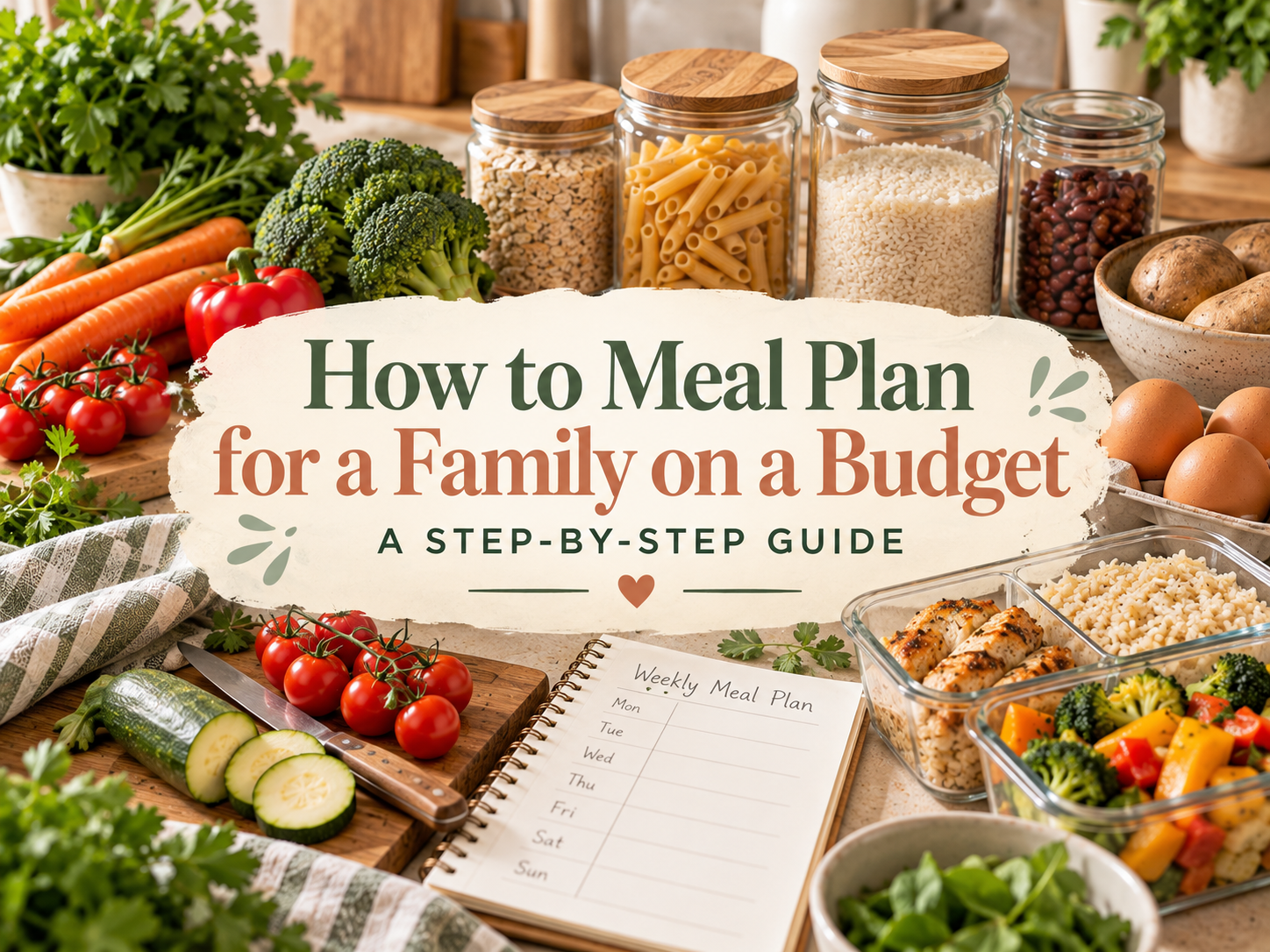
This guide will walk you through the entire process, including a realistic 7-day family meal plan, an organized grocery list, easy budget-friendly dinners, and practical strategies for reducing food waste.
You’ll also learn how to adapt meals for picky eaters, use leftovers safely, and build a weekly meal planning routine that works for your family.
Let’s make affordable family meals a little easier.
If you’re looking for more simple dinner inspiration, explore our easy one-pot dinners for busy families*—perfect for nights when you want less cooking and fewer dishes.
What Is Budget Meal Planning for Families?
Budget meal planning means deciding what your family will eat before you shop, choosing ingredients that fit your grocery budget, and organizing meals so you can use what you buy.
It doesn’t mean eating the same boring dinner every night or buying only the cheapest foods available.
Instead, it’s about making thoughtful choices that balance nutrition, convenience, food preferences, and cost.
For example, rather than buying chicken for one recipe, ground turkey for another, and several different vegetables that may never get used, you can plan meals around a smaller group of versatile ingredients.
A package of chicken might become:
- Chicken and rice bowls on Monday
- Chicken quesadillas on Wednesday
- Chicken and vegetable soup later in the week
One ingredient, several meals, and less waste.
Why Meal Planning Can Help You Save Money
A practical weekly meal plan can help your family:
- Buy fewer unnecessary groceries
- Reduce last-minute takeout orders
- Use ingredients before they spoil
- Plan affordable meals around store specials
- Make better use of leftovers
- Avoid purchasing ingredients for recipes you never prepare
- Reduce daily dinner decisions
The USDA’s MyPlate resources also encourage planning meals, shopping thoughtfully, and using budget-friendly foods to support healthy eating.
The goal isn’t to create the cheapest possible menu. It’s to make the best use of the grocery money you have.
Step 1: Set a Realistic Weekly Grocery Budget
Before choosing recipes, decide how much your family can comfortably spend on groceries.
There’s no universal grocery budget that works for every household.
A family with two toddlers will have different needs from a family with two teenagers. Grocery costs also vary by state, store, dietary restrictions, and food preferences.
The USDA publishes monthly food-cost estimates for different ages and household situations. These can provide useful context, but your actual budget should reflect your family’s circumstances.
How to Calculate Your Grocery Budget
Start by looking at your grocery spending over the last four weeks.
Include food purchased for breakfast, lunch, dinner, and snacks, along with any beverages you regularly buy.
Then calculate your average weekly spending.
For example:
| Grocery spending | Illustrative amount |
|---|---|
| Week 1 | $175 |
| Week 2 | $190 |
| Week 3 | $165 |
| Week 4 | $180 |
| Four-week total | $710 |
| Weekly average | $177.50 |
If your family currently spends about $177.50 per week, you might experiment with a $165 weekly grocery budget.
That would be a planned reduction of $12.50 per week, or approximately $50 over four weeks, assuming you can maintain it without sacrificing necessary food.
Start with a manageable change rather than an unrealistic target.
A Simple Grocery Budget Breakdown
Here’s one possible way to organize a $165 weekly grocery budget for a family of four.
| Category | Example budget |
|---|---|
| Breakfast foods | $25 |
| Lunch ingredients | $30 |
| Dinner ingredients | $75 |
| Fruit, vegetables, and snacks | $25 |
| Flexible reserve | $10 |
| Total | $165 |
These categories are only planning examples. Many ingredients overlap between meals, so you don’t need to track every item separately.
Parent tip: Keep a small buffer in your budget. Unexpected price changes, school events, and hungry growth spurts happen.
Step 2: Shop Your Pantry Before Making a Grocery List
One of the easiest ways to reduce grocery spending is to use what you already own.
Before planning next week’s meals, take five minutes to check your refrigerator, freezer, and pantry.
You may be surprised by how many ingredients are already available.
Your 5-Minute Kitchen Inventory
Check these areas:
| Area | What to look for | Possible meal |
|---|---|---|
| Pantry | Rice, pasta, canned beans | Rice bowls or bean chili |
| Refrigerator | Cheese, carrots, yogurt | Quesadillas or snack plates |
| Freezer | Frozen vegetables | Vegetable fried rice |
| Refrigerator | Eggs | Breakfast-for-dinner |
| Pantry | Canned tomatoes | Pasta sauce or soup |
| Freezer | Cooked chicken | Chicken wraps |
Write down ingredients that should be used soon.
Then build your family meal plan around them.
For example, if you already have rice, frozen broccoli, and canned beans, you could plan two or three meals without buying many additional ingredients.
Try the Use-It-First Shelf
Choose one visible refrigerator shelf or container for ingredients that need to be used soon.
Before making dinner, check this area first.
It’s a simple kitchen organization habit that can help reduce forgotten food.

Step 3: Choose Budget-Friendly Ingredients That Work in Multiple Meals
The secret to affordable family meal planning isn’t finding seven completely different cheap recipes.
It’s choosing ingredients that work together.
Instead of shopping for every recipe separately, build your menu around a handful of versatile foods.
Budget-Friendly Grocery Staples for Families
| Food category | Affordable options | How to use them |
|---|---|---|
| Protein foods | Eggs, beans, lentils, chicken thighs, tofu | Bowls, wraps, soups |
| Grains | Rice, oats, pasta, tortillas | Breakfast, lunch, dinner |
| Vegetables | Frozen broccoli, carrots, cabbage, potatoes | Sides, soups, casseroles |
| Fruit | Bananas, apples, seasonal fruit | Breakfast and snacks |
| Dairy | Plain yogurt, block cheese, milk | Breakfast, sauces, snacks |
| Pantry staples | Canned tomatoes, peanut butter, dried beans | Sauces, sandwiches, stews |
Prices vary, so compare the unit price on shelf labels rather than assuming that a larger package or store brand is always cheaper.
The Ingredient Overlap Method
Here’s an example of how to use the same ingredients across several dinners.
| Ingredient | Meal 1 | Meal 2 | Meal 3 |
|---|---|---|---|
| Rice | Chicken rice bowls | Bean burrito bowls | Vegetable fried rice |
| Black beans | Quesadillas | Chili | Rice bowls |
| Carrots | Chicken dinner | Soup | Pasta sauce |
| Cheese | Quesadillas | Baked potatoes | Egg muffins |
| Canned tomatoes | Pasta | Chili | Soup |
This approach can help you buy fewer different products while still creating varied meals.
My favorite planning rule: Choose ingredients first, then build recipes around them—not the other way around.
Step 4: Create a 7-Day Family Meal Plan on a Budget
Now let’s put everything together.
The following sample weekly meal plan is designed for a family of four: two adults and two school-age children.
It focuses on familiar ingredients, simple cooking methods, and dinners that can be adapted for picky eaters.
The plan assumes no food allergies or special dietary restrictions.
7-Day Budget-Friendly Dinner Plan
| Day | Dinner | Approximate hands-on time |
|---|---|---|
| Monday | Chicken & Vegetable Rice Bowls | 15 minutes |
| Tuesday | Creamy Tomato & White Bean Pasta | 15 minutes |
| Wednesday | Black Bean & Cheese Quesadillas | 15 minutes |
| Thursday | Baked Potatoes with Broccoli & Cheese | 15 minutes |
| Friday | Homemade Turkey & Bean Chili | 20 minutes |
| Saturday | Vegetable Egg Fried Rice | 15 minutes |
| Sunday | Leftover Chili Baked Potatoes | 10 minutes |
Hands-on times exclude some cooking, baking, cooling, and preparation time. All seven dinners are intended to serve four, with planned leftovers where indicated.
Monday: Chicken & Vegetable Rice Bowls
Servings: 4
Total time: Approximately 35 minutes
Ingredients
- 1½ lb boneless chicken thighs
- 1½ cups dry rice
- 12 oz frozen mixed vegetables
- 1 tbsp olive oil
- 1 tsp garlic powder
- ½ tsp paprika
- Salt and pepper to taste
Instructions
- Cook the rice according to package instructions.
- Cut the chicken into bite-size pieces.
- Heat the oil in a large skillet and cook the chicken with the seasonings until it reaches 165°F.
- Cook the frozen vegetables according to package directions.
- Divide the rice, chicken, and vegetables among four bowls.
Budget tip: Chicken thighs may cost less than chicken breasts. Compare prices per pound.
Picky eater tip: Serve the rice, chicken, and vegetables separately rather than mixing everything together.

Tuesday: Creamy Tomato & White Bean Pasta
Servings: 4
Total time: Approximately 25 minutes
Ingredients
- 12 oz dry pasta
- 1 can (15 oz) white beans, drained and rinsed
- 1 can (28 oz) crushed tomatoes
- ½ cup plain Greek yogurt
- 1 tbsp olive oil
- 1 tsp Italian seasoning
- 1 cup frozen spinach
- ¼ cup grated Parmesan, optional
Instructions
- Cook the pasta according to package directions.
- Heat olive oil, tomatoes, seasoning, beans, and spinach in a saucepan.
- Simmer until the vegetables are heated through and the sauce thickens slightly.
- Remove from the heat and stir in the Greek yogurt to create a creamy sauce.
- Toss with pasta and add Parmesan if desired.
Budget tip: Beans add protein and fiber without requiring a large quantity of meat.
Parent tip: If your child prefers plain pasta, set aside a small portion before adding the sauce.
Wednesday: Black Bean & Cheese Quesadillas
Servings: 4
Total time: Approximately 20 minutes
Ingredients
- 8 medium flour tortillas
- 2 cans (15 oz each) black beans, drained and rinsed
- 2 cups shredded cheese
- ½ tsp cumin
- 1 cup shredded carrots
- 1 tbsp oil for cooking
Instructions
- Mash the black beans lightly with the cumin.
- Spread the beans over half of each tortilla.
- Add cheese and shredded carrots.
- Fold the tortillas and cook in a lightly oiled skillet until golden and heated through.
- Cut into wedges and serve.
Budget tip: Buying a block of cheese and shredding it yourself may be less expensive than buying pre-shredded cheese.
Kid-friendly variation: Keep the carrots on the side for children who prefer familiar textures.
Thursday: Baked Potatoes with Broccoli & Cheese
Servings: 4
Total time: Approximately 55–65 minutes
Ingredients
- 4 large baking potatoes
- 12 oz frozen broccoli
- 1 cup shredded cheese
- ½ cup plain Greek yogurt
- 1 tbsp olive oil
- Salt and pepper to taste
Instructions
- Preheat the oven to 425°F.
- Scrub and dry the potatoes, prick them with a fork, and rub lightly with olive oil.
- Bake until completely tender, approximately 45–60 minutes depending on size.
- Cook the broccoli according to package directions.
- Split the potatoes and top with broccoli, cheese, and Greek yogurt.
Budget tip: Potatoes are versatile and can be used for breakfast, lunch, or dinner.
Easy variation: Add a spoonful of black beans for extra protein.
Friday: Homemade Turkey & Bean Chili
Servings: Approximately 8
Total time: Approximately 45 minutes
Ingredients
- 1 lb ground turkey
- 2 cans (15 oz each) kidney beans, drained and rinsed
- 1 can (28 oz) crushed tomatoes
- 1 medium onion, diced
- 2 carrots, finely chopped
- 1 tbsp olive oil
- 2 tsp mild chili powder
- 1 tsp cumin
- 1 cup water
Instructions
- Heat the olive oil in a large pot.
- Add the onion and carrots and cook until they begin to soften.
- Add the ground turkey and cook until it reaches 165°F.
- Stir in the beans, tomatoes, seasonings, and water.
- Simmer for approximately 20–25 minutes, stirring occasionally.
- Serve four portions and refrigerate the remaining chili promptly in shallow containers.
Budget tip: Combining ground turkey with beans stretches the meat across more servings.
Meal prep tip: Reserve approximately four servings for Sunday’s dinner. Refrigerate safely or freeze promptly if needed.
Saturday: Vegetable Egg Fried Rice
Servings: 4
Total time: Approximately 20 minutes, using previously prepared rice
Ingredients
- 4 cups cooked, properly chilled rice
- 4 eggs
- 2 cups frozen mixed vegetables
- 2 tbsp reduced-sodium soy sauce
- 1 tbsp cooking oil
- 1 tsp garlic powder
Instructions
- Heat the oil in a large skillet.
- Cook the frozen vegetables until hot.
- Push them to one side and scramble the eggs until fully cooked.
- Add the chilled rice and garlic powder.
- Stir-fry until everything is thoroughly heated.
- Add soy sauce and serve.
Food safety note: Cook rice ahead only if you can cool it promptly and refrigerate it safely. Use within the recommended storage period, and reheat leftovers to 165°F. Alternatively, prepare fresh rice and use it immediately.
Budget tip: Frozen mixed vegetables make it easy to add variety without buying several different fresh vegetables.
Sunday: Leftover Chili Baked Potatoes
Servings: 4
Total time: Approximately 55–65 minutes
Ingredients
- 4 large baking potatoes
- Approximately 4 servings of safely stored Friday chili
- ½ cup shredded cheese
- Optional plain Greek yogurt
Instructions
- Bake the potatoes at 425°F until tender.
- Reheat the chili to 165°F, using a food thermometer.
- Split the potatoes and spoon the chili over the top.
- Sprinkle with cheese and add yogurt if desired.
Important: Friday’s chili must have been refrigerated promptly at 40°F or below and kept within the recommended storage period. If that cannot be assured, use a properly frozen portion thawed safely or prepare a fresh topping.
Budget tip: Repurposing leftovers into a different meal helps reduce food waste without making dinner feel repetitive.

Step 5: Make a Budget Grocery List for the Week
A good grocery list is one of the most useful parts of a weekly family meal plan.
Instead of wandering through the store and adding ingredients as you go, organize your list by category.
This example covers the seven dinners above, including the extra chili portions used on Sunday.
It does not include a full week’s breakfasts, lunches, snacks, or beverages.
Example Grocery List for a Family of Four
| Grocery item | Quantity to buy | Illustrative cost |
|---|---|---|
| Chicken thighs | 1½ lb | $5.25 |
| Ground turkey | 1 lb | $4.50 |
| Eggs | 1 dozen | $3.50 |
| Dry rice | 2 lb bag | $2.50 |
| Dry pasta | 1 lb box | $1.25 |
| Flour tortillas | 10-count package | $2.50 |
| Baking potatoes | 5 lb bag | $4.50 |
| Black beans | 2 cans | $2.00 |
| Kidney beans | 2 cans | $2.00 |
| White beans | 1 can | $1.00 |
| Crushed tomatoes | 2 large cans | $4.00 |
| Frozen mixed vegetables | 2 bags, 12 oz each | $3.00 |
| Frozen broccoli | 1 bag, 12 oz | $1.50 |
| Frozen spinach | 1 bag | $1.50 |
| Carrots | 1 lb | $1.25 |
| Onion | 1 | $0.75 |
| Shredded or block cheese | 16 oz | $4.00 |
| Plain Greek yogurt | 16 oz | $2.75 |
| Parmesan | Small container | $2.50 |
| Oil and seasonings | Allocated pantry cost | $2.50 |
| Estimated total | $54.25 |
These prices are illustrative assumptions, not a verified October 2026 grocery-store quote. They assume conventional products and typical package sizes. Some packages will have unused portions, and local prices may be substantially higher or lower.
The list provides the main ingredients for seven dinners for four people. It assumes that basic water and standard kitchen equipment are available.
What Does This Cost Per Serving?
The seven dinners provide 28 planned dinner servings.
Using the illustrative grocery basket:
$54.25 ÷ 28 servings = approximately $1.94 per planned serving.
This is a basket-cost illustration, not an audited recipe-cost calculation. Because some purchased ingredients remain unused and some pantry costs are allocated estimates, the actual cost of food consumed will differ.
The best way to get a reliable number for your family is to save your grocery receipt and record how much of each ingredient you actually use.

Step 6: Plan Affordable Breakfasts, Lunches, and Snacks
Dinner planning is a great place to start, but a complete family grocery budget also needs to account for breakfast, lunch, and snacks.
The easiest approach is to repeat a few simple options rather than planning 21 completely different meals.
Easy Budget Breakfast Ideas
| Breakfast | Why it works |
|---|---|
| Oatmeal with banana | Uses affordable pantry staples |
| Scrambled eggs and toast | Simple and filling |
| Plain yogurt with fruit and oats | Easy to customize |
| Peanut butter toast with banana | Quick, where allergies permit |
| Homemade overnight oats | Convenient for busy mornings |
Affordable Family Lunch Ideas
- Leftover chicken and rice bowls
- Bean and cheese wraps
- Egg salad sandwiches
- Hummus with whole-grain pita
- Leftover pasta
- Vegetable quesadillas
- Simple homemade soup
For younger children, adjust food textures and preparation to reduce choking risks. Follow school allergy policies when packing lunches.
Budget-Friendly Snacks
Choose foods your family actually enjoys, such as apples, bananas, yogurt, cheese, homemade popcorn for children old enough to eat it safely, or vegetables with hummus.
You don’t need a pantry full of individually packaged snacks to offer variety.
Parent tip: Instead of buying five different snack products every week, choose two or three affordable favorites and rotate them.
Step 7: Meal Prep Without Spending Your Entire Sunday Cooking
Family meal prep doesn’t have to involve preparing every meal for the next seven days.
For many parents, a short preparation session is more realistic.
The 45-Minute Family Meal Prep Routine
First 10 minutes: Plan and organize
Review your menu, check expiration dates, and gather storage containers.
Next 15 minutes: Prepare vegetables
Wash and prepare vegetables as appropriate. Refrigerate cut produce promptly.
Next 15 minutes: Prepare ingredients
Shred cheese, portion dry ingredients, and prepare any components that can be safely refrigerated.
Final 5 minutes: Label and organize
Label containers with preparation dates and place foods in the refrigerator or freezer.
Cooking meat, rice, or full meals requires additional time and appropriate cooling procedures. Don’t try to rush food safety steps to fit an arbitrary meal-prep schedule.
Helpful Kitchen Tools for Budget Meal Planning
You don’t need expensive equipment to start meal planning.
However, a few reusable tools can make the process easier.
- Glass Meal Prep Containers
Stackable containers help organize cooked ingredients, leftovers, and individual meal portions.
→ Shop Glass Meal Prep Containers on Amazon*
2. Magnetic Weekly Meal Planner
A refrigerator meal planner makes it easy for the whole family to see what’s for dinner.
→ Explore Magnetic Weekly Meal Planners on Amazon*
3. Reusable Freezer Labels
Freezer-safe labels make it easier to track preparation dates and use older food first.
→ Find Reusable Freezer Labels on Amazon*
3.Digital Kitchen Scale
A basic kitchen scale can help with recipe quantities and dividing bulk ingredients into portions.
→ Browse Digital Kitchen Scales on Amazon*
Choose tools that fit your actual cooking habits. You can start with containers and a handwritten shopping list you already own.

Step 8: Make Budget Meals Work for Picky Eaters
Planning meals on a budget can be more challenging when your child only accepts a handful of familiar foods.
The last thing you want is to spend money on ingredients that end up untouched.
But you also don’t need to prepare a completely separate dinner for every family member.
Try the Build-Your-Own Dinner Method
Instead of mixing everything together, serve some meals in separate components.
For example:
| Family dinner | Picky eater-friendly approach |
|---|---|
| Chicken rice bowls | Serve chicken, rice, and vegetables separately |
| Bean quesadillas | Offer a simple cheese quesadilla with beans on the side |
| Tomato pasta | Serve plain pasta with a little sauce separately |
| Chili | Offer familiar components alongside the family meal |
| Baked potatoes | Let children choose from available toppings |
This can make meals feel more predictable while still allowing opportunities to explore new foods.
Let Kids Help With Meal Planning
Even young children can participate in simple decisions.
Ask questions such as:
“Would you rather have broccoli or carrots with dinner?”
“Should we make quesadillas on Tuesday or Wednesday?”
“Which fruit should we add to our grocery list?”
Offering manageable choices can help children feel involved without putting them in charge of the entire family menu.
Avoid pressuring children to finish their plates or eat unfamiliar foods.
If your child has persistent feeding difficulties, significant dietary restrictions, or growth concerns, consult their pediatrician.
Step 9: Reduce Food Waste and Save More Money
Food waste can quietly increase your grocery spending.
A bag of forgotten spinach, leftover rice that wasn’t refrigerated promptly, or fruit that spoils before anyone eats it can all affect your budget.
10 Practical Ways to Reduce Food Waste
- Check your refrigerator before grocery shopping.
- Plan meals around ingredients you already own.
- Buy only quantities your family can realistically use.
- Freeze suitable ingredients before they spoil.
- Label cooked leftovers with preparation dates.
- Choose recipes that share ingredients.
- Use frozen vegetables when fresh produce may go unused.
- Serve manageable portions and offer seconds as needed.
- Plan one flexible leftover meal each week.
- Track which foods your family consistently leaves uneaten.
Know When Leftovers Are No Longer Safe
Food safety should always come before saving money.
According to USDA guidance, most cooked leftovers should be refrigerated within two hours, used within three to four days, or frozen for longer storage.
Reheat leftovers to an internal temperature of 165°F.
Don’t rely on smell alone to determine whether food is safe.
Step 10: Build a Weekly Meal Planning System You Can Actually Maintain
The best meal plan isn’t the most detailed one.
It’s the one your family can follow without feeling overwhelmed.
Try setting aside 15–20 minutes once a week to organize your meals.
Your Weekly Meal Planning Checklist
- Review your grocery budget.
- Check the pantry, refrigerator, and freezer.
- Look at store specials and compare unit prices.
- Choose five to seven realistic dinners.
- Plan simple breakfasts and lunches.
- Include meals that use overlapping ingredients.
- Write a grocery list by category.
- Check your family’s calendar for busy evenings.
- Plan safe storage for leftovers.
- Keep one flexible meal option for unexpected changes.
What If Your Weekly Meal Plan Doesn’t Go as Planned?
That’s completely fine.
Maybe your child has an after-school activity that runs late. Maybe everyone is exhausted on Thursday. Or perhaps you simply don’t feel like making the dinner you planned.
A meal plan is a tool, not a rulebook.
Move meals around, use a safe freezer meal, or repeat something simple.
Consistency matters more than perfection.
Frequently Asked Questions About Budget Meal Planning for Families
How do I start meal planning on a budget?
Start by reviewing your current grocery spending, checking what food you already have, and choosing a few affordable meals that share ingredients. Make a grocery list before shopping and adjust your plan based on actual prices and your family’s preferences.
How much should a family of four spend on groceries?
There isn’t one correct amount. Costs depend on children’s ages, location, dietary needs, and shopping habits. The USDA publishes monthly food-cost estimates that can help families compare different spending levels.
What are the cheapest healthy meals for families?
Meals based on beans, lentils, eggs, rice, pasta, potatoes, and seasonal or frozen vegetables can be affordable and nutritious. Examples include bean chili, vegetable fried rice, lentil soup, baked potatoes, and bean quesadillas.
Can I meal plan for a family on $100 a week?
Some households may be able to plan around $100 per week, particularly when using pantry staples, store discounts, and lower-cost ingredients. For other families, that amount may be insufficient. A realistic budget should reflect household size, nutritional needs, and local prices.
How do I meal plan for picky eaters?
Start with familiar foods, offer manageable choices, and keep some ingredients separate when needed. Try not to introduce several unfamiliar foods in the same meal.
Is meal prepping actually cheaper?
It can be, especially when it helps reduce unnecessary purchases, food waste, and last-minute takeout. However, buying more ingredients than you need or preparing food that nobody eats can eliminate those savings.
How do I make a grocery list for a family on a budget?
Organize your list into categories such as produce, proteins, grains, dairy, frozen foods, and pantry staples. Check your existing inventory first, compare unit prices, and purchase ingredients that work across multiple meals.
How can I save money on groceries without sacrificing nutrition?
Choose a variety of affordable nutrient-dense foods, compare store brands, use frozen or canned produce when appropriate, and plan meals around versatile ingredients. USDA MyPlate provides additional guidance for healthy eating on a budget.
Final Thoughts: Feeding Your Family Well Doesn’t Have to Break the Bank
Budget meal planning isn’t about being perfect, cooking everything from scratch, or turning every grocery trip into a complicated math problem.
It’s about creating a little more breathing room in your family’s week.
When you know what’s for dinner, have the ingredients you need, and can use leftovers safely, everyday cooking becomes more manageable.
Start small.
Choose three affordable dinners for next week. Check your pantry before shopping. Write a simple grocery list. And pay attention to which meals your family genuinely enjoys.
Over time, those small habits can help you build a family meal planning routine that feels natural rather than overwhelming.
You don’t need a perfect meal plan. You need a realistic one that works for your family, your schedule, and your budget.
Save this guide for your next grocery planning day, and explore more easy, family-friendly recipes here at Tiny Tummy.
Trusted Resources and Further Reading
The following U.S. resources provide additional information about affordable nutrition, grocery planning, and food safety.
- USDA MyPlate – Healthy Eating on a Budget
https://www.myplate.gov/web/eat-healthy/healthy-eating-budget - USDA – Monthly Cost of Food Reports
https://www.fna.usda.gov/research/cnpp/usda-food-plans/cost-food-monthly-reports - USDA Food Safety and Inspection Service – Leftovers and Food Safety
https://www.fsis.usda.gov/food-safety/safe-food-handling-and-preparation/food-safety-basics/leftovers-and-food-safety - USDA – Safe Minimum Internal Temperature Chart
https://www.fsis.usda.gov/food-safety/safe-food-handling-and-preparation/food-safety-basics/safe-temperature-chart
Affiliate Disclosure & Health Disclaimer
Affiliate Disclosure: This article contains affiliate links. As an Amazon Associate, I earn from qualifying purchases. If you purchase through an affiliate link, I may receive a small commission at no additional cost to you. Affiliate links help support Tiny Tummy and the creation of free family-friendly resources.
Health & Nutrition Disclaimer: This article is intended for general educational and informational purposes only. It does not provide personalized medical or nutritional advice. Food needs and appropriate portion sizes vary by age, growth, activity level, medical conditions, and individual circumstances. Always follow appropriate food safety recommendations and consult a qualified healthcare professional if you have concerns about your child’s nutrition, allergies, or health.
Budget Disclaimer: All grocery prices and cost calculations in this article are illustrative examples, not guaranteed prices or independently verified shopping receipts. Actual grocery costs vary by location, retailer, season, package size, and household needs.
Leave a Reply